

Fascia is not just a structural element. It is an active, living tissue deeply connected to the nervous system. For years, fascia was misunderstood and underestimated. Initially, it was thought to be little more than passive connective tissue, simply holding things in place. However, scientific research has proven that fascia is far more complex and vital than we once believed.
In this article, we will explore the incredible role of fascia, how it works, and why it is so much more than just “packing peanuts.” We will also discuss how fascia interacts with the nervous system, its ability to shape the body’s response to stress, and its healing potential.
The Transformation of Fascia Research
For many years, fascia was regarded as little more than a passive structure. It was thought to simply surround muscles and organs. However, advancements in imaging technology and research have transformed our understanding of fascia. Scientists such as Robert Schleip, Carla Stecco, and Helene Langevin have studied fascia in depth, revealing its importance in both physical movement and emotional response.
Fascia is Alive: A Complex Network of Communication
Fascia is not a simple covering; it is a highly intricate communication network. Researchers found that fascia is filled with sensory nerve endings that report back to the brain. This makes fascia more active and responsive than previously thought. It has been shown that fascia is even more richly innervated than muscles themselves in some areas, meaning it plays an essential role in how we feel and move.
Fascia’s Connection to the Nervous System
One of the most groundbreaking discoveries in fascia research is its connection to the nervous system. Fascia works closely with the brain, relaying information about pressure, stretch, and movement. This constant flow of information allows the body to react almost instantaneously to changes in the environment. Fascia helps us sense our surroundings and coordinate our movements.
The role of fascia in proprioception, the body’s ability to sense its position in space, is becoming more widely recognized. Fascia is integral to this process, helping us maintain balance and move fluidly.
The Fascial Web: How Fascia Works
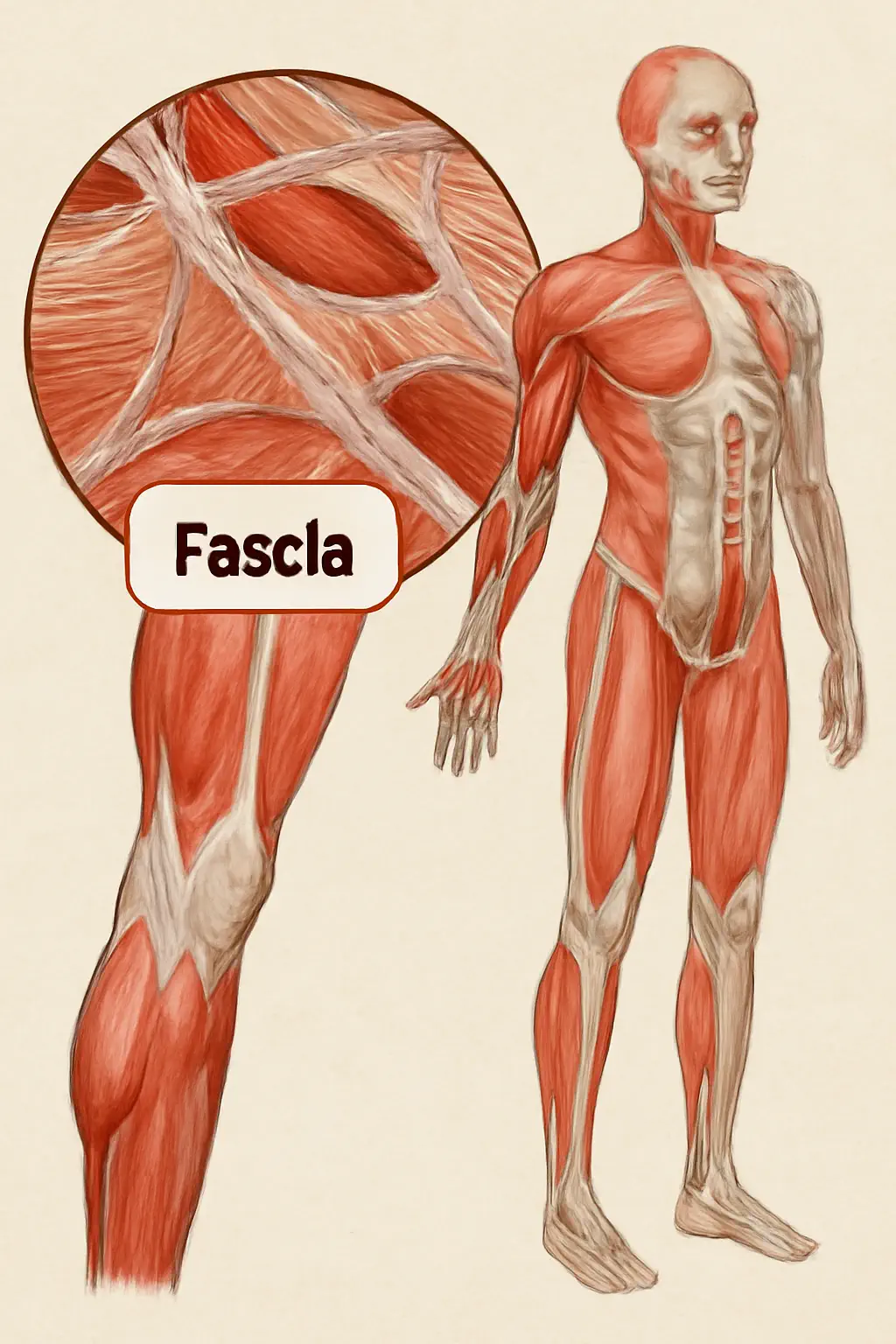
Fascia behaves more like a three-dimensional spiderweb rather than a passive wrap around muscles. It connects muscles, joints, and organs, creating a continuous fabric throughout the body. This interconnectedness means that any movement in one part of the body can influence other areas. Fascia does not simply sit around muscles; it is woven into every part of the body.
Fascia Responds to Stretch and Movement
When you stretch, fascia reacts. It adapts and responds to changes in the body. This dynamic response helps the body move efficiently, transmitting force, sensation, and information in all directions. Fascia, much like a musical instrument, senses vibration and tension. Any change in tone or tension is immediately felt throughout the entire system.
This understanding of fascia has led to a broader view of the mind-body connection. Fascia is not just a passive material that holds muscles together; it is a responsive tissue that contributes to the body’s ability to adapt and move.
Fascia’s Role in Stress and Trauma
One of the most remarkable aspects of fascia is how it reacts to emotional stress and trauma. Just as the nervous system adapts to a stressful event, fascia also adjusts. It can tighten in response to physical injury or emotional strain, much like a seatbelt locking during sudden braking.
When emotional trauma occurs, fascia can “remember” this stress, leading to long-term changes in its structure. Over time, fascia can develop creases and patterns that reflect these experiences, even if the original trauma has long passed.
How Fascia Influences Healing and Recovery
The role of fascia in the healing process is one of the most exciting aspects of current research. As researchers like Helene Langevin have shown, fascia responds to gentle touch and sustained pressure. This means that therapies focused on the fascia, such as myofascial release, can help realign and rehydrate fascia to promote healing.
Fascia’s Hydration and Structure
Fascia responds to hydration and mechanical input. When fascia is adequately hydrated, it remains flexible and resilient. However, when fascia is dehydrated or damaged, it can become stiff and restrictive. This stiffness can lead to pain, limited movement, and discomfort.
Gentle manipulation of the fascia, such as through touch or massage, can help improve its hydration and mobility. Carla Stecco’s work in anatomical mapping has shown the precise nature of fascial planes, which has improved our understanding of why pain sometimes follows specific patterns.
Supporting Fascia’s Healing Process
Research suggests that the fascia’s ability to change and heal is influenced by external factors, such as touch and movement. A well-supported fascial system can help the body recover more quickly from injury and trauma. As Robert Schleip discovered, fascia is involved in autonomic regulation, meaning it can influence how we feel safe, grounded, or connected in our bodies.
Healing fascia is not about fixing something broken. It’s about supporting the natural intelligence of the body to restore balance. With the right conditions, the body’s fascia can soften and adapt, allowing for increased movement and reduced pain.
The Mind-Body Connection: Fascia as a Sensory Organ
One of the most fascinating revelations in recent years is the idea that fascia acts as a sensory organ. It is not just a passive structure; it plays an active role in how we perceive the world around us. Fascia helps us sense pressure, stretch, and movement, and it is deeply connected to our emotions.
Fascia and Emotional Responses
When we experience emotional stress or trauma, fascia adapts alongside the nervous system. This is a protective mechanism. Fascia may tighten to protect us from further harm, much like the body’s natural “fight or flight” response. This process is intelligent and adaptive, designed to help us survive and heal.
As fascia adjusts to emotional trauma, it can create lasting patterns in the body. These patterns can affect posture, movement, and even the way we feel emotionally. Understanding this connection between fascia and emotional health has opened up new avenues for healing.
Fascia in Movement and Bodywork
Bodywork therapies, such as massage, myofascial release, and movement therapy, focus on restoring the fluidity and function of the fascia. By working with fascia, therapists can help the body regain its natural alignment and mobility.
The Body Artisan Approach
Within the Body Artisan approach, working with fascia feels more like a conversation than a command. Touch becomes an invitation to heal, and pressure is used to support the body’s natural movement. When fascia feels safe and supported, it begins to soften, rehydrate, and release tension.
This process is slow and gentle, much like the thawing of frozen ground in spring. Over time, fascia begins to loosen, and patterns that once felt permanent can begin to shift. This is the power of fascia at work—a living system that responds to touch and attention.
The Role of Fascia in Recovery
Fascia plays a key role in the recovery process after injury or trauma. By addressing fascial restrictions, the body can heal more effectively. Fascia, as a connective tissue, plays a vital role in the structural integrity of the body. Restoring balance to the fascia can improve posture, reduce pain, and promote overall health.
Fascia: A Living System of Intelligence
When we look at fascia for what it truly is, we see that it is not a passive filler. It is a living system full of intelligence and purpose. Fascia is not just there to hold things together; it plays an integral role in how we experience and interact with the world.
The Body’s Wisdom
Fascia carries both strength and memory. It is a living system, responsive to both physical and emotional stimuli. When we honor fascia and understand its true role in the body, healing shifts from fixing something broken to supporting something wise.
As Carla Stecco and Robert Schleip have shown, the fascia’s role is not just mechanical. It is deeply intertwined with our emotions, movement, and overall health. The body is not a machine; it is a living system of extraordinary intelligence, with fascia as one of the key fibers holding everything together.
“Fascia isn’t just filler; it’s the connection that makes us whole.” – Dr. Robert Schleip.
By recognizing the importance of fascia, we can shift our approach to healing. Fascia, when supported, can restore balance, ease, and flexibility. The body already knows how to heal itself; our role is to support that natural process.
This article delves deep into the science and importance of fascia, shedding light on its transformative role in the human body. Through cutting-edge research and hands-on therapies, we are beginning to understand how fascia plays a central role in health, healing, and movement. From emotional trauma to physical injury, fascia’s ability to adapt and respond is a testament to the body’s innate wisdom and resilience.